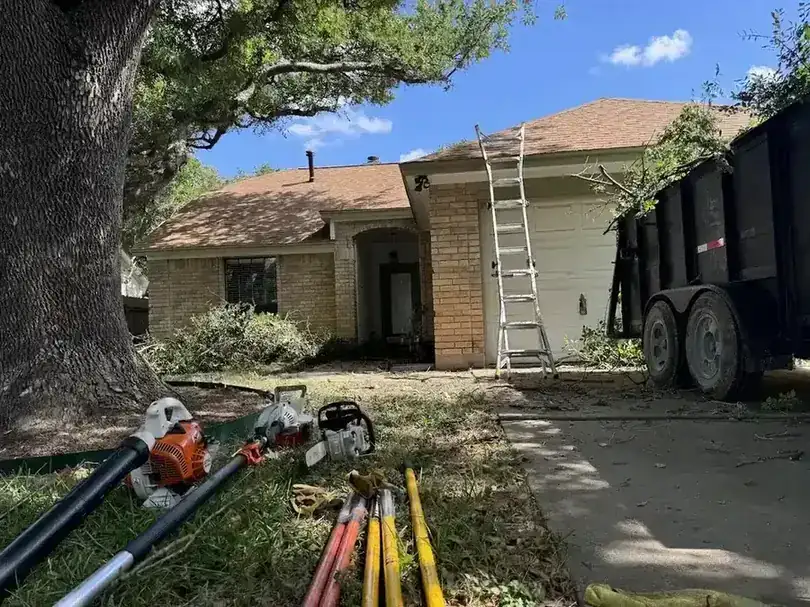
Homeowners often use tree trimming and tree pruning to mean the same thing. That is not a problem.
You do not need the perfect technical term before asking for an estimate. The more useful question is: What are you trying to change about the tree?
Maybe branches are touching the roof. Maybe one large limb is hanging too low over the driveway. Dead or broken branches may need to come out, a storm may have damaged part of the canopy, or the tree may look too heavy on one side.
Those goals matter more than the label. Moriah Tree & Landscaping handles practical clearance, dead or broken branches, storm-related branch work and selective cutting around the property. See the tree trimming and pruning service in Plano when you are ready to discuss the work.
Trimming vs Pruning Trees: Is There a Real Difference?
In everyday homeowner language, the terms often overlap. Many tree-service companies use both words because customers use both words. The technical work is easier to understand by looking at the reason for the cut.
- Branches cut away from a roof are clearance work.
- A dead branch calls for deadwood removal.
- An overextended limb may need selective pruning.
- Broken branches may call for corrective or storm work.
- Changes to the outside shape are appearance-focused trimming.
Instead of asking “Which word is right?” ask “What problem am I trying to solve?”
When Is the Goal Simply Clearance?
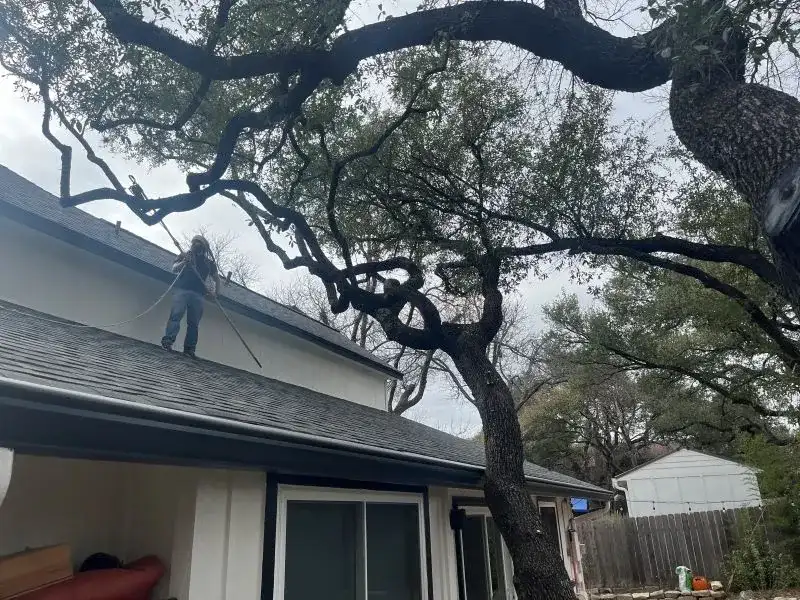
Clearance is one of the most common reasons homeowners request branch work. Growth may extend over a roof, toward gutters, across a driveway, into a walkway, over a gate or toward a fence.
In that situation, the goal is not necessarily to thin or reshape the whole tree. It may be to create enough room around one part of the property while leaving the rest of the canopy alone.
A useful estimate should define what needs clearance, which branches are involved, how much space is actually needed and what nearby structures affect the work area. That is clearer than asking someone to “trim the tree back.”
When Does Selective Pruning Make More Sense?
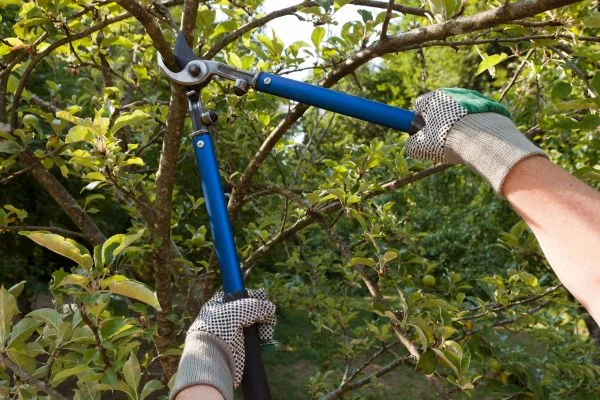
Selective pruning focuses on specific branches for a specific reason. That may include dead branches, broken branches, crossing or rubbing branches, an overextended limb, an obvious clearance problem or storm-damaged sections.
Texas A&M Forest Service says pruning mature trees should have a purpose because every cut affects future growth. That supports a simple homeowner rule: do not ask for more cutting than the problem requires.
Is More Pruning Better for the Tree?
No. More cutting does not automatically mean a healthier tree. Leaves produce energy, and removing too much live canopy can increase stress and reduce growth.
Texas A&M Forest Service currently says not to remove more than 25% of a tree’s crown at one time. That is an upper-limit guideline, not a target. A better question is: What is the minimum amount of live canopy that needs to be removed to accomplish the goal?
Be cautious of a vague plan to “thin the whole tree out” when no one explains why.
What About Dead or Broken Branches?
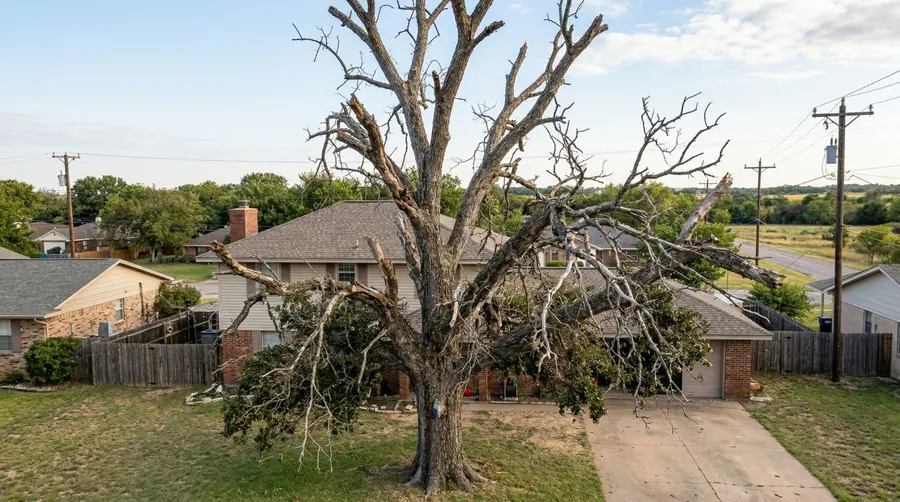
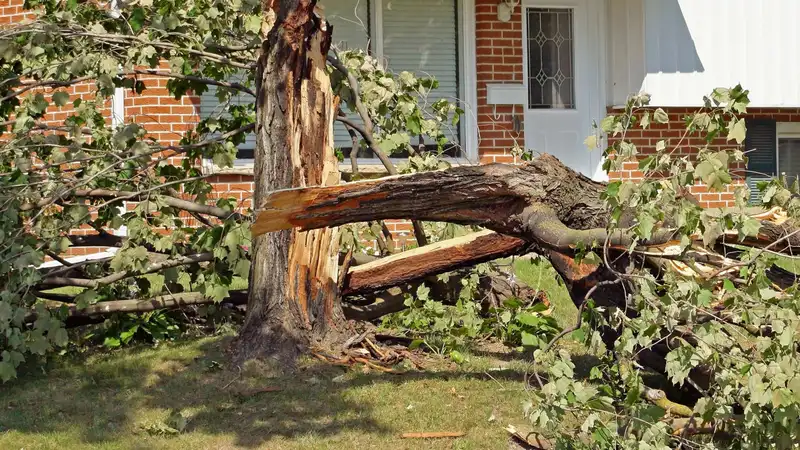
Dead or broken branches are different from healthy live branches. A broken limb may need attention because it hangs above a roof, sits over a driveway, blocks a walkway, is caught in the canopy or was damaged in a storm.
If a large branch is hanging overhead, do not stand under it to inspect the break. For an urgent storm hazard, use Moriah’s 24/7 emergency and storm tree service.
Does Tree Pruning Help With Storm Risk?
Selective pruning can address dead branches, damaged branches, certain overextended limbs and obvious branch conflicts. But trimming cannot make a tree “storm-proof.” Severe weather can damage a healthy-looking tree, and major structural failure may call for a different solution.
If the whole tree is dead, badly split, uprooted or severely unstable, start with the tree removal information for Plano properties.
Define the goal before the cuts
Show us what the branches are doing, what they are near and what you want cleared. Moriah can help route the job to the right service.
When Is Trimming Not Enough?
Sometimes the branch is not the main problem. A removal conversation may make more sense when the whole tree is dead, the trunk is badly split, the tree has uprooted or shifted, major failure affects the whole structure, or repeated large sections are failing.
A guide cannot diagnose every tree from a symptom list. Its purpose is to help you recognize when the problem may be larger than routine branch work.
What Is Tree Topping?
Tree topping is not another word for trimming. Topping generally means cutting major branches back aggressively to stubs or reducing a tree’s height without preserving normal branch structure.
Texas A&M storm-recovery guidance warns against topping storm-damaged trees because it can remove too much foliage and lead to weakly attached new growth. Moriah does not market topping as a routine tree-care shortcut.
Describe the actual goal instead: roof clearance, reducing one overextended limb, removing storm damage or creating driveway clearance. A specific problem is easier to plan than “just take the top off.”
When Is the Best Time for Tree Pruning in Plano?
There is no universal date for every tree and every type of pruning. Timing depends on species, whether branches are alive or dead, how much live canopy is being removed, tree stress, storm damage and disease risk.
For tree pruning in Plano, Texas A&M Forest Service notes that routine removal of dead, weak or damaged branches may be possible at different times of year, while heavier live-branch work deserves more care.
What about oak trees?
Texas A&M currently recommends avoiding pruning or wounding oak trees from February through June because of oak wilt risk. It also recommends painting fresh oak pruning wounds immediately, regardless of season.
What Is the Branch Collar, and Why Does It Matter?
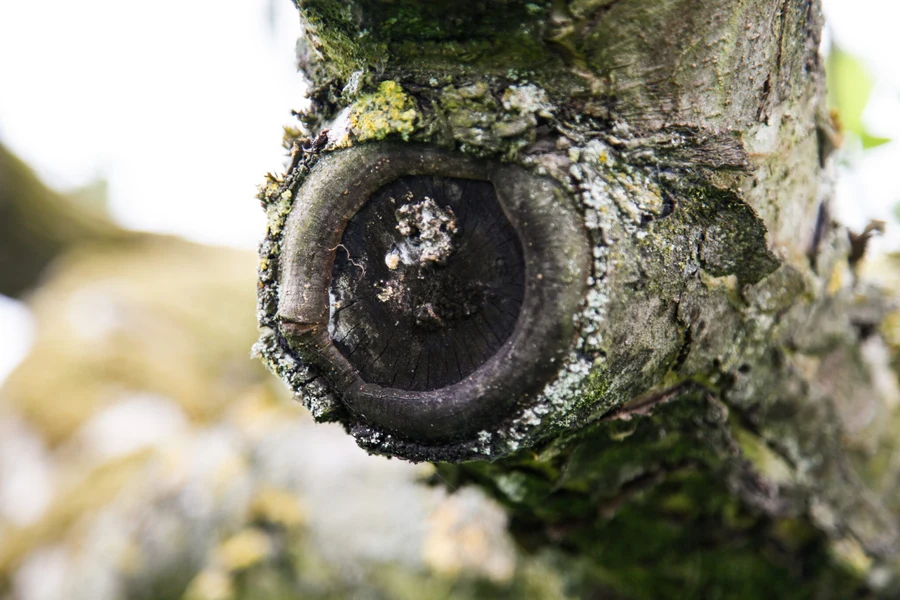
The branch collar is the slightly swollen area where a branch joins a larger limb or the trunk. Texas A&M recommends making branch-removal cuts just outside this area rather than cutting flush against the trunk.
A flush cut can damage trunk tissue and affect how the tree closes around the wound. Homeowners do not need to master advanced pruning technique before hiring someone, but it shows why where the cut is made can matter as much as which branch is removed.
Should Every Tree Be Thinned?
No. Routine thinning does not automatically improve tree health. Trees make energy through their leaves, so removing too much canopy can stress the tree.
Thinning may be part of a specific objective. But “the canopy looks full” is not, by itself, a reason to remove a large amount of live growth. The work should have a clear purpose.
How Do I Explain What I Need Without Knowing Tree Terms?
Use normal homeowner language. You can say:
- “These branches are touching the roof.”
- “This limb hangs too low over the driveway.”
- “I want the dead branch removed.”
- “A branch broke in the storm.”
- “One side extends much farther than the other.”
- “I’m not sure if this tree needs trimming or removal.”
That is enough. The estimate can start with what you want the property to do better.
What Photos Help With a Tree Trimming Estimate?
If you can take them safely, send:
1. The whole tree
Show the overall canopy and the property around it.
2. The problem branches
Show the exact limb or area that concerns you.
3. What the branches are near
Include the roof, driveway, fence, walkway, utility service or neighboring property.
4. The base and trunk
This is useful when you are unsure if the issue is bigger than branch work.
5. Access
Show a narrow gate, side yard or other restriction. Do not stand under a broken limb or approach electrical lines for a photo.
Request a free estimate and send safe-distance photos.
Trimming or Removal: A Quick Decision Guide
This is a routing guide, not a diagnosis.
What Should You Tell Moriah Before the Estimate?
You do not need to decide what the job should technically be called. Tell Moriah what the branches are doing, what you want cleared, what broke in the storm, what is near the tree and how the work area can be reached.
Moriah Tree & Landscaping is insured, offers free estimates and brings five years of hands-on tree-service experience.
Review trimming and pruning options
Request a free estimate
Call (903) 265-5319
Common Questions
Is tree trimming just for appearance?
No. Branch work can also create roof or driveway clearance, remove dead or broken branches, address a specific limb or respond to storm damage.
How much of a tree should be pruned at once?
There is no target percentage for every tree. Current Texas A&M guidance says not to remove more than 25% of the crown at one time. The practical goal is to remove only what the objective requires.
Can trees be trimmed at any time of year?
Some light work and removal of dead or damaged branches may be possible at different times, but species, stress, live-canopy removal and disease risk matter. Oaks need special timing consideration in Texas.
Guidance used in this article
Texas A&M Forest Service: Pruning
Texas A&M Forest Service: Pruning Mature Trees
Texas A&M Forest Service: Tree Care From Storm Damage