If a storm damages a tree, the first step is not to start cutting. Keep people away from the area and look for electrical hazards without moving closer.
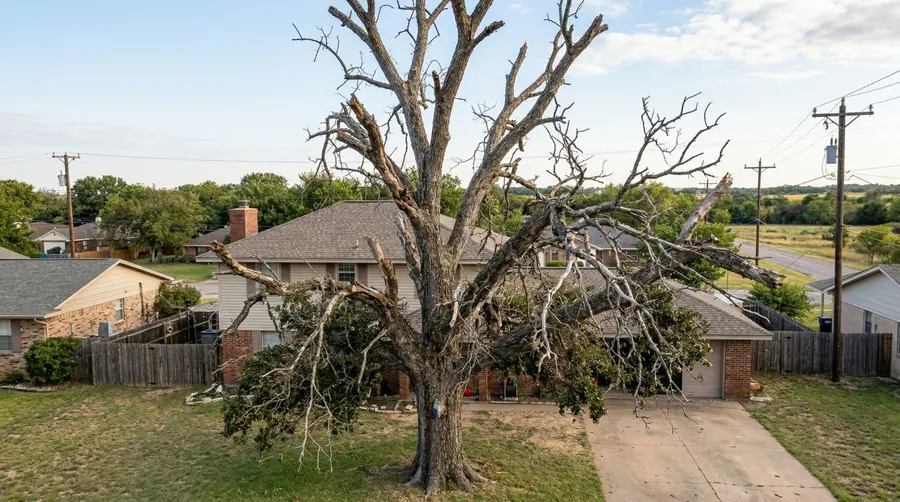
A tree may have fallen completely, split, shifted at the roots, dropped a large limb, left a branch hanging in the canopy, landed on a roof or vehicle, or blocked normal access. Some damaged trees need removal. Some only need damaged branches removed. Others can recover.
The first job is to make the situation safe enough to decide what comes next. For an urgent tree problem, call Moriah at (903) 265-5319 or review the 24/7 emergency and storm tree service.
What Should I Do First After Storm Tree Damage in Plano?
- Keep people and pets away. Do not stand under broken branches, hanging limbs, split trunks, leaning trees or partially fallen trees.
- Look for power lines from a safe distance. Do not walk closer to inspect them.
- Call 911 for a downed line or immediate electrical danger. Never touch or try to move a downed line or an object touching one.
- Do not start cutting a large or unstable tree yourself. Damaged wood can be under tension and may move when cut.
- Take photos only from a safe area. A wide view can help explain what happened.
- Call for tree help. Once electrical and immediate life-safety issues are handled, the tree problem can be reviewed.
What If the Tree Is Touching a Power Line?
Do not approach it. A tree or branch touching an energized line can also become energized.
Oncor safety guidance says never approach, touch or attempt to move a downed power line or anything touching one. Leave the area and call 911. A downed line may also be reported to Oncor through its official emergency channel.
If the line is down: leave the area, keep others away, call 911, and report the line to Oncor through its official emergency channel.
Oncor advises property owners not to prune within 10 feet of power lines. Pole-to-pole high-voltage trimming is handled by Oncor or approved line-clearance personnel. Potentially hazardous vegetation near lines can be reported to Oncor's vegetation management team.
Moriah is not a line-clearance contractor. Normal tree work should not begin in a restricted area until the electrical hazard has been made safe.
Is a Hanging Limb Still Dangerous After the Storm Stops?
Yes. The wind may be gone, but a branch can remain cracked, partly attached, caught in other branches or loaded with unusual weight. It may hang over a roof, driveway or walkway.
Texas A&M Forest Service guidance warns people not to stand under broken limbs that are hanging or caught overhead. Keep the area clear. Do not pull on the limb from the ground or climb under it to inspect the break.
Does a Storm-Damaged Tree Always Need to Be Removed?
No. Texas A&M explains that trees can recover from storm damage, and the way a tree looks immediately afterward can be misleading.
A tree may be able to remain when damage is limited, enough healthy crown remains, the main structure is still workable and the tree is not creating a serious hazard.
A removal conversation becomes more likely with severe structural failure, including a badly split trunk, major uprooting, extensive loss of main branches, very little crown remaining or damage that prevents the tree from remaining safely. This is a decision point, not a reason to automatically sell removal. Learn what affects tree removal in Plano.
How Can I Tell Whether the Problem Is a Limb or the Whole Tree?
Start with what visibly failed. The following examples can help you describe the problem, but they are not a final diagnosis.
One broken limb, one hanging branch, localized damage or a damaged branch over a roof or driveway. The next step may involve tree trimming and pruning in Plano.
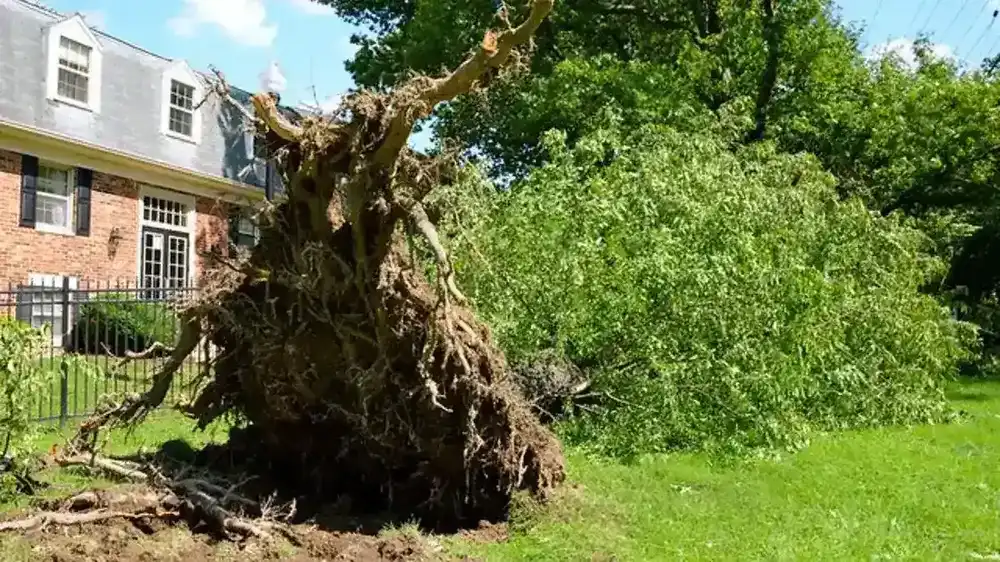
A split trunk, lifted root plate, new lean, partial uprooting, multiple major failures or a tree already on the ground. The next step may involve urgent removal or further assessment.
Do not decide the final diagnosis from an online checklist alone.
What Does Root Movement After a Storm Mean?
A tree that leaned for years is different from one that shifted during a storm. Visible warning signs can include soil lifting near the base, exposed or broken roots, a new lean, movement in the root plate or cracking soil around the trunk.
If the tree shifted at the roots, keep people away from the direction it could fall. Do not stand at the base trying to inspect the roots closely. Tell the tree-service company what changed: “The tree was not leaning like this before the storm.”
Need Help Deciding the Next Step?
Describe what failed, where the tree is resting and whether power lines, structures or blocked access are involved. Electrical and life-safety emergencies come first.
Fallen Tree or Branches: What to Do Right Away
Small debris lying flat in a clear area is different from a loaded tree or suspended limb. Before moving anything, check whether electrical lines could be hidden underneath, another branch is hanging overhead, the debris is supporting part of a larger fallen tree, or a trunk appears to be under tension. Storm tree damage cleanup should wait until those hazards are mapped from a safe distance.
Oncor warns that live wires can be hidden under fallen vegetation and storm debris. When in doubt, stay clear. The goal is not to make the yard look clean as fast as possible. It is to avoid turning cleanup into a second emergency.
Should I Cut Broken Branches Back Immediately?
Not every damaged tree needs aggressive pruning right away. Texas A&M recommends removing damaged branches where appropriate, avoiding over-pruning, preserving healthy foliage and avoiding tree topping.
A tree that lost branches in a storm already lost part of its canopy. Removing healthy live growth only to make the tree look symmetrical can add stress. Large broken limbs and overhead work should be left to qualified professionals.
What Is Tree Topping, and Why Should I Avoid It?
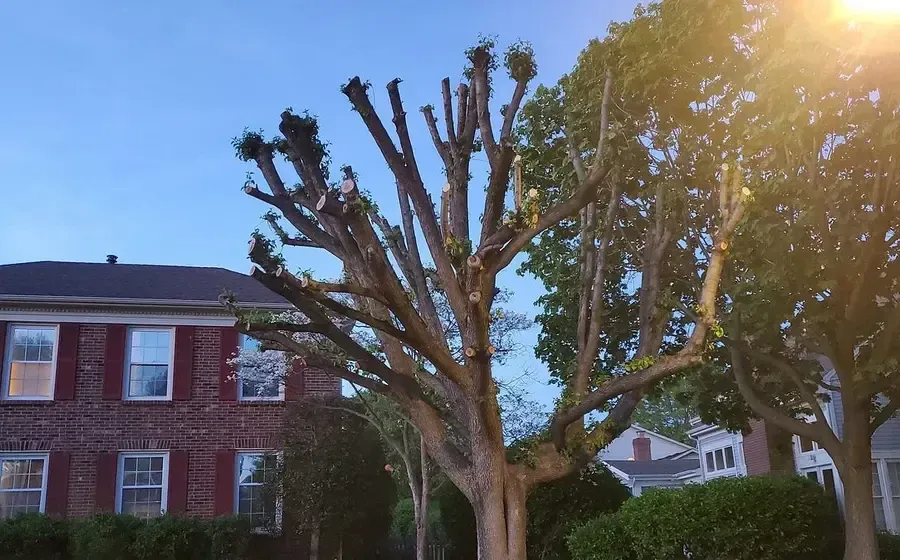
Topping means cutting major branches back to stubs or drastically reducing the canopy without normal branch structure. Texas A&M warns against topping because it removes foliage the tree needs, can slow recovery and may produce weakly attached shoots that are more likely to break later.
If the tree can remain, the goal should be to address actual damage, not force the canopy into an artificial shape.
Can a Tree Recover After Losing a Major Limb?
Sometimes. A mature tree may survive the loss of a major limb, while one that loses most of its main branches or much of its crown may have far less chance of recovery.
Useful questions include: How much crown is still intact? Is the trunk split? Are the remaining branches structurally usable? Did the root system shift? Is the tree now a hazard? A homeowner does not need to answer all of these alone.
What Photos Should I Take After a Storm?
Only take photos if you can remain in a safe location. A useful set can include:
- A wide view of the whole tree and nearby property.
- The damaged area, a broken limb, split, lean or fallen section.
- What the tree is touching, such as a roof, fence, driveway, vehicle or structure.
- The tree base, only when you can photograph it from outside the likely fall zone.
- Access to the property or work area.
Do not get a better photo by standing under hanging limbs, climbing onto the roof, stepping around downed electrical lines or moving unstable branches. You can send safe-distance photos with a free estimate request.
Should I Take Photos for Insurance Records?
If you can document the condition safely before major cleanup, the photos may be useful for your own records and any insurance conversation. Coverage depends on the policy and circumstances. Moriah does not promise that insurance covers tree work, handle claims or guarantee reimbursement.
If you plan to contact your insurer, ask what documentation they want.
What If the Tree Fell on My House?
Stay out of any part of the property that appears unsafe. Do not climb onto the roof, walk underneath the tree, cut branches that are supporting its weight or approach when electrical lines are involved.
For an immediate life-safety or electrical emergency, call 911. Once the immediate danger has been addressed, call Moriah and explain where the tree is resting, whether access is blocked, whether electrical lines are involved and whether anyone is inside or injured.
What If the Tree Blocks My Driveway?
A fallen tree blocking normal property access can be urgent. Do not try to move a large tree with a vehicle, rope or improvised pulling system. The trunk or branches may shift as weight changes.
Call and explain whether the driveway is completely blocked, the tree is fully on the ground, branches remain overhead, and utilities or structures are involved. See Moriah’s emergency tree service guidance.
Storm Damage: Pruning or Removal?
Use this as a general routing guide, not a diagnosis.
How Fast Can Moriah Respond After a Storm?
Moriah operates 24/7 for urgent tree situations, but the website does not promise a fixed arrival time. Timing can depend on storm severity, road conditions, property access, utility hazards and simultaneous emergency calls.
Call now and tell us what happened: (903) 265-5319.
Get Help With a Damaged Tree
- Keep people away.
- Check for electrical hazards from a safe distance.
- Call 911 for a downed line, fire, sparking or immediate danger.
- Do not stand under hanging limbs.
- Take safe-distance photos if possible.
- Call Moriah and describe what failed.
Moriah Tree & Landscaping is insured, operates 24/7, offers free estimates and brings five years of hands-on tree-service experience.
Safety Sources
Official guidance used in this article: