The easiest way to choose between stump grinding and stump removal is to start with one question: What do you want to do with the space afterward?
If you mainly want the visible stump out of the way so the yard is easier to mow, use or rework, grinding may be the practical scope. If the area needs deeper excavation for a future project, or you want more of the stump and root mass removed, the job may require a more involved removal scope.
The important point is that grinding the stump does not mean every root disappears underground. Moriah Tree & Landscaping provides stump removal in Plano, by grinding or by full extraction. The final scope should be based on the stump, visible roots, access, underground concerns and your plan for the area. Review the stump service in Plano when you are ready to discuss the work.
Key Takeaways
- Grinding reduces the visible stump below grade; it does not remove the entire root system.
- More complete removal disturbs a larger area and may suit work that needs underground clearance.
- Lawn, beds, replanting and construction each call for a different cleanup and soil plan.
- The estimate should define visible roots, chips, backfill, restoration, access and underground concerns.
What Is Stump Grinding?
Grinding uses a machine to break the visible stump into wood chips and take the main stump below the surrounding grade.
It is often the more practical option when the goal is to remove the above-ground obstacle, make mowing easier, reclaim part of the yard, prepare the area for lawn or a planting bed, or address selected surface roots included in the agreed scope.
Grinding is not the same as excavating every root that once belonged to the tree. Large roots can remain underground and break down over time.
What Is Left After Grinding?
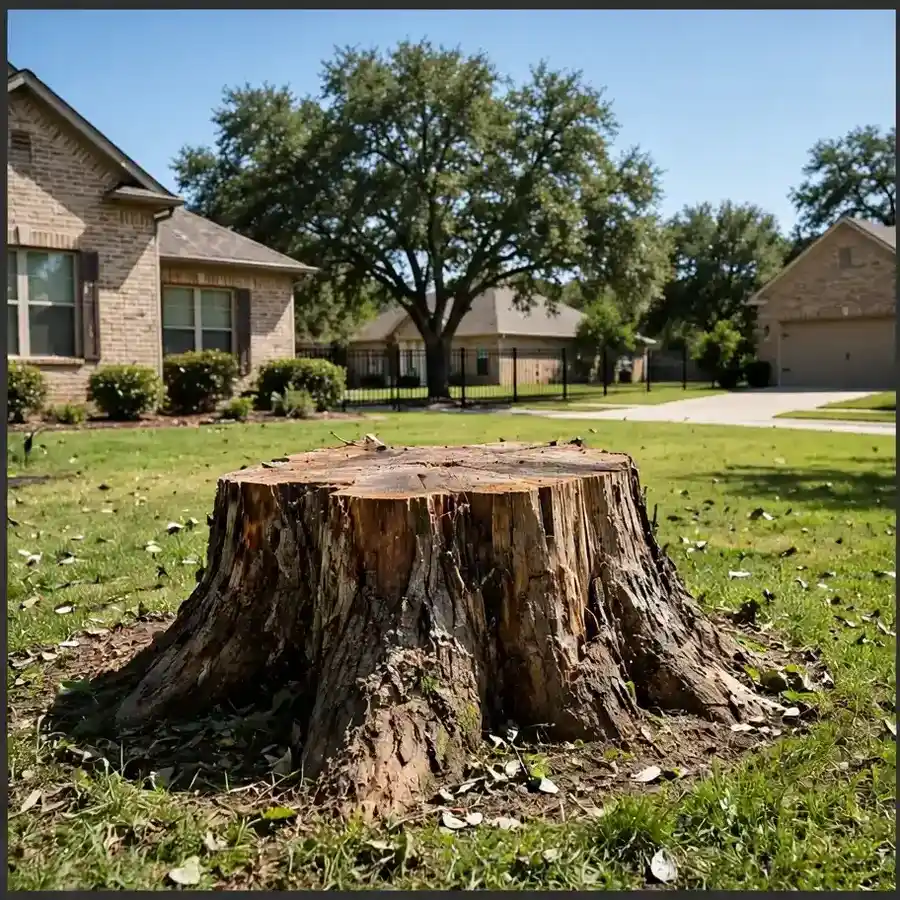
Typically, the site has wood chips or grindings, soil mixed with woody material, remaining underground roots and a depression or hole where the stump was. What happens to the chips and hole should be clear in the estimate.
Do not assume all chips will be hauled away, topsoil will be added, sod will be installed or every root will be removed. Those are separate scope items unless they are specifically included.
What Is Stump Removal in Plano?
People use the phrase stump removal in different ways. Some Plano companies use stump removal as another name for grinding. A more useful distinction is the amount of material removed and how much ground is disturbed. Not sure whether to grind or remove the stump completely? Start with what you want to do with the space afterward.
Stump Grinding
Reduces the main stump below grade and may address agreed visible roots.
More Complete Removal
Removes more of the stump and root mass through a more invasive, excavation-type scope.
A more complete removal may make sense when underground space matters for the next project. Examples include a footing, certain hardscape work, fence or post work, major grade changes, or any project that cannot simply sit above old stump and root material.
The exact method should be defined in the estimate rather than assumed from the words “stump removal.”
Does Stump Grinding Remove All the Roots?
No. This is one of the most important differences to understand. A tree can have roots extending well beyond the visible stump.
Grinding removes the central stump and may include larger surface roots when they are part of the scope, but the whole root system is not normally excavated from the yard. The remaining roots usually stay in the soil and decompose over time.
That is why future use matters. A homeowner planning to mow over the area has different needs from someone preparing for construction.
What If Surface Roots Are Still in the Yard?
Tell Moriah about them before the estimate is finalized. Useful photos should show the stump, root flare at the base, large roots visible above the soil, roots running toward a sidewalk, bed or lawn, and nearby irrigation heads or other obstacles.
Do not assume visible roots are automatically included just because the main stump is being ground. The estimate should define whether you are discussing the main stump only, the stump plus selected surface roots, or a more involved removal scope.
Which Option Is Better if I Want Grass or Sod?
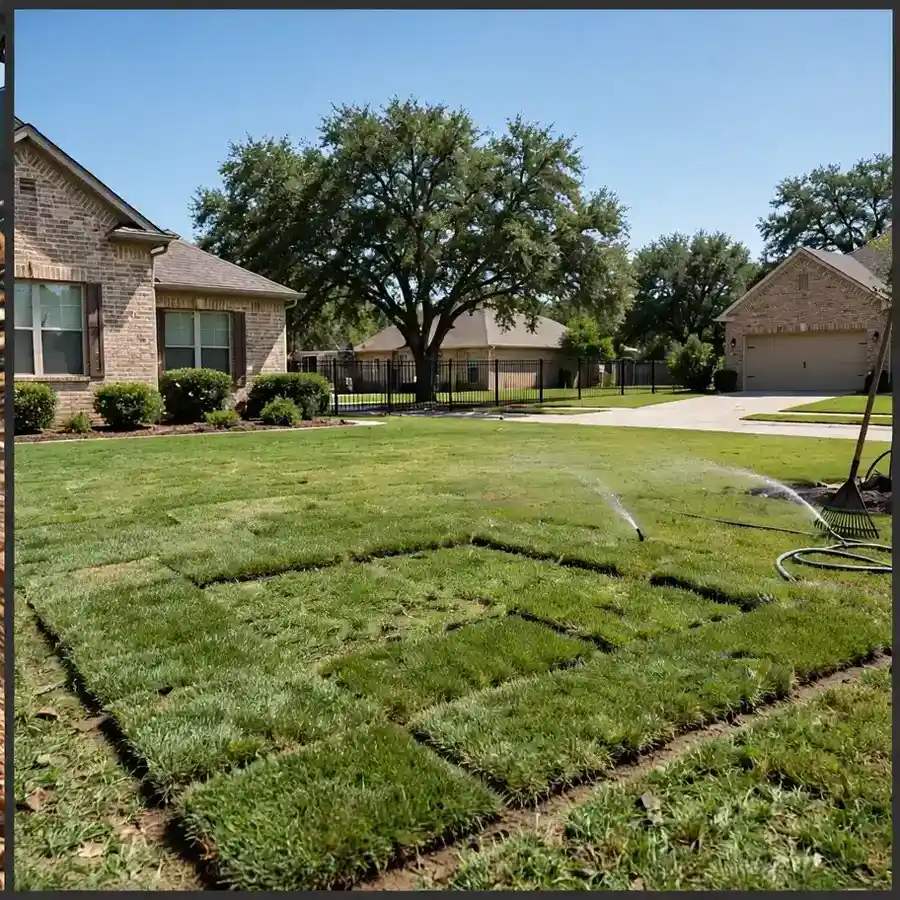
For many lawn-reuse situations, grinding may be enough to remove the main obstacle. But the area still needs correct preparation afterward.
Iowa State University Extension notes that the grindings can change soil structure, moisture behavior and nutrient balance. Simply spreading sod over a thick pile of fresh wood chips is not the same as restoring the soil.
If lawn is the goal, ask what happens to the chips, how deep the finished area will sit, whether soil will be added, and whether lawn restoration is part of the tree-service scope or a separate landscaping step. Moriah does not promise sod or topsoil unless the estimate includes it.
Which Option Is Better if I Want a Planting Bed?
Grinding may be a reasonable starting point if the area only needs to become usable for a bed. Still, old roots remain, chips can affect the soil, and the old tree’s root zone continues to occupy space below ground.
The final preparation depends on what you plan to plant. A simple seasonal bed is different from installing a new large tree in the exact same position.
Start With the Future Use
Tell Moriah what you want the area to become. That makes it easier to define the stump, root and cleanup scope before work begins.
Can I Plant a New Tree in the Same Spot?
It is possible, but a new location is generally better. Iowa State University Extension advises against planting a new tree in the exact same spot when possible.
Old roots occupy underground space. Sawdust and wood material can change the soil. The previous tree may also have had a disease or pest issue. These conditions can make it harder for a new tree to establish.
If a new tree must go in the same spot, the site may need more old stump and root material removed, grindings removed, soil preparation, and time for old roots to decompose. Do not assume grinding alone makes the hole immediately ready for another tree.
How Far Away Should the New Tree Be?
Iowa State Extension’s replanting guidance says a location at least 3 feet away, and ideally 6 to 8 feet away, can avoid many problems tied to old roots and altered soil.
That is general horticultural guidance, not a Moriah service guarantee. If replanting is your goal, mention it during the estimate so the future use is understood. Moriah’s current marketed services do not include tree planting.
What If I Want a Patio, Fence or Other Hardscape?
This is where the difference between “make the stump disappear from view” and “prepare the underground space” becomes important.
A future project may care about remaining roots, settling, excavation depth, post or footing placement, underground utilities, irrigation and grade. Do not assume a standard grind is automatically the correct preparation for construction or hardscape work.
Tell the estimator what is planned next. The stump scope should be defined around the future project.
Do I Need to Think About Underground Utilities?
Yes, especially when the job involves digging or more invasive root and stump removal.
Texas811 homeowner guidance says Texas excavators must contact 811 at least two business days before digging, excluding weekends and holidays. This applies in backyards, too. If a contractor performs the excavation, that excavator needs the appropriate locate request or ticket.
This does not mean every shallow stump grind automatically involves the same excavation process. It means underground utilities must be considered when the planned scope disturbs the ground through digging or excavation.
Texas811 also notes that public utility owners may not mark every private line running from a meter into the property. Tell the estimator about sprinkler and irrigation lines, landscape lighting, private electrical or gas runs, pool lines and other buried features you know about. This article does not provide DIY clearance distances or excavation instructions.
What Happens to the Wood Chips After Grinding?
Grinding can create more material than homeowners expect. The grindings usually contain wood chips, soil, and pieces of root or stump material.
Possible job scopes include leaving the chips on site, using some to backfill the hole, moving them elsewhere on the property, or hauling some or all away. There is no universal cleanup promise; ask what the estimate includes.
If the long-term goal is lawn or replanting, too much fresh woody material in the soil may not be ideal. Iowa State’s stump-removal guidance recommends removing stump grindings before adding new topsoil for better replanting conditions.
Is Full Stump Removal Always Better?
No. More invasive work is not automatically better. If the goal is to remove the visible stump, mow more easily, clean up the area or prepare a basic bed, grinding may solve the problem without unnecessary excavation.
A more complete removal may make sense when deeper underground space matters, visible root mass is a major part of the problem, a future footing or post needs the exact area, or the new use cannot work around remaining roots.
Does Stump Removal Fix Every Root Problem?
No. Even a more involved project does not mean every root from the old tree is excavated across the entire yard. Tree roots can extend far from the trunk.
The useful question is not “Can you remove every root?” It is: Which roots interfere with what I plan to do next? That keeps the scope practical.
How Does Access Affect Stump Work?
Grinding and removal equipment must reach the stump. Useful access details include gate width, narrow side yards, fences, steps, slopes, retaining walls, landscaping, parked vehicles, soft ground and tight areas between structures.
Moriah does not publish a universal minimum gate width because the equipment and access plan can vary. A photo of the access path can be just as useful as a photo of the stump.
What Photos Should I Send for a Stump Estimate?
- Full stump: show the entire stump and surrounding ground.
- Widest part: photograph the base and root flare clearly.
- Surface roots: include every visible root you want discussed.
- Nearby obstacles: show fences, walls, patios, sidewalks, irrigation heads, utility equipment and planting beds.
- Access route: show the gate and path from the driveway or street to the stump.
- Future use: explain if you want grass, a planting bed, a fence or another tree nearby.
That future-use detail can change the recommended scope. You can request a free estimate and send the project details.
Stump Grinding or Removal: Which Scope Fits?
Use this quick guide as a starting point, not a universal rule.
What Should Be Clear in the Estimate?
Before approving stump work, confirm which stump is included; whether visible surface roots are included; whether the job is grinding or a more complete removal; what happens to the chips; whether the hole is backfilled; whether soil, sod or restoration is included; what access is available; whether underground utilities or private lines affect the scope; and what you want to do with the area afterward.
A clear scope is more useful than arguing over the label.
What If the Tree Has Not Been Removed Yet?
If the tree is still standing and also needs to come down, start with the removal scope. Tree removal and stump work can be discussed together, but they are not automatically the same service.
Review tree removal in Plano, then tell Moriah whether you want the tree only, the tree plus grinding, or the tree plus a more complete stump and root removal discussion. That avoids learning after the tree is gone that the stump was not included.
Get a Free Stump Estimate in Plano
Start with what you want to do with the area next. Send Moriah the service address, a full photo of the stump, photos of visible surface roots, the access path, nearby obstacles and your plan for the space.
Moriah Tree & Landscaping is insured, offers free estimates and brings five years of hands-on tree-service experience.
See stump service details or request a free estimate. You can also call (903) 265-5319.
Helpful Sources
Official guidance referenced in this article: